Showing posts with label Author/Illustrator Interviews. Show all posts

Tuesday, September 23, 2025

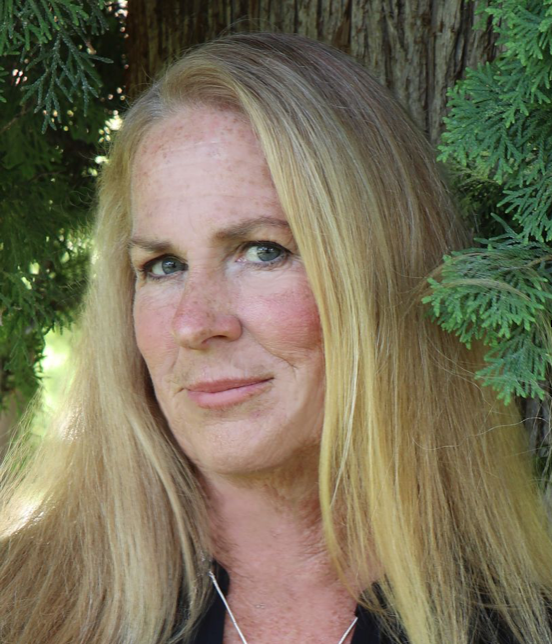
Guest Post: Lisa Rogers

I’m completely thrilled to share a guest post today by Lisa Rogers, author of, most recently
Woody’s Words: Woodrow Wilson Rawls and Where the Red Fern Grows, illustrated by Susan Reagan. She’s talking about that perennial dilemma for writers, Show vs. Tell, and offering up some tips on how perhaps to approach it constructively! Here’s Lisa:

Writers Who Tell Too Much

Have you ever been told that your stories are too “tell-y?” I have. Though I can spot a tell from paragraphs away, it can be hard to see it in my own writing.

I don’t always tell too much. I’ve been lucky when a story’s form curbs the telling temptation. For my debut, 16 Words: William Carlos Williams and “The Red Wheelbarrow,” I chose a parallel structure that showed Williams and Thaddeus Marshall going about their workdays. My initial text was so spare that first, my agent, then my editor, asked me to add more. For Joan Mitchell Paints a Symphony, the text came showing the act of painting, perfect for this artist didn’t like talking about her work–she wanted viewers to experience it without being told how.

However, during oodles of drafts of Beautiful Noise: The Music of John Cage, I told. And told. And told, until I threw out all that telling and let the reader directly experience Cage’s work. For Woody’s Words: Woodrow Wilson Rawls and Where the Red Fern Grows, out from Calkins Creek/Astra Books for Young Readers, let’s just say that 1,250 words should have shown me that something was not right.

Example #1:

All the Facts

In the late 1950s, Woody was working at a farm when a woman named Sophie came to visit the owners. They weren’t home, and Woody and Sophie got to talking.

Soon Woody and Sophie fell in love. But something bothered Woody. He was almost 45 years old and just getting settled. He’d barely gone to school. Sophie was educated and had a good-paying job.

Rewrite: The Right Specifics

In Idaho, Woody worked in construction, stacked hay on a farm, and spent weekends fishing and writing.

Best of all, he met a woman named Sophie. who came to a ranch to visit a friend. When they met, it was the right time for both of them. They fell in love and decided to marry. But something bothered Woody. His writing might get in the way of his marriage.

Example #2:

Where’s the Passion?

The winter after Woody and Sophie married, it was too cold to work construction, and Woody became anxious. When Sophie asked what was wrong, he told her about his dream to be an author. Sophie believed in him.

Rewrite: Feel What Your Characters Feel

The winter after Woody and Sophie married, it was too cold to work construction, and Woody grew anxious. Sophie had a good-paying job, but what could he do until spring? When Sophie asked what was wrong, Woody decided to trust her with his deepest wish. Sophie didn’t hesitate. She believed in him.

These changes might seem small, but they make the difference between prose that is flat and dull and words that show emotion. Placing myself in a scene helps me to understand my subjects well enough to be able to show how they feel, what they see, how they act, and what's important to them. That helps my words connect with readers, so they can put themselves in the scene, too.

One way to spot the tell is to read your work out loud. Not just read it, but perform it, as if you’re reading it to a group of children and need them to hang on to every word. If it’s a struggle, it might be that you’re telling.

Use specific words to delineate action: “was working at a farm” is vague; “stacked hay at a farm” provides a visual. If you create pictures in the reader’s mind, your story will be one that resonates.

Lisa Rogers is the award-winning author of Woody’s Words: Woodrow Wilson Rawls and Where the Red Fern Grows, called “a poignant tribute to the power of story" by Kirkus; Joan Mitchell Paints a Symphony, termed “simply marvelous” by Kirkus in a starred review; Beautiful Noise: The Music of John Cage, which received a Golden Kite Honor, the Julia Ward Howe Notable Book Award, and three starred reviews; the Crystal Kite finalist and Julia Ward Howe Award winner 16 Words, called “a fine introduction to a celebrated American poet” by The New York Times, which received two starred reviews; and the bestselling Elvis Presley: A Little Golden Book Biography. She also is the author of the Massachusetts Must-Read Hound Won’t Go, the author of the title poem of the anthology If I Could Choose a Best Day, ed. Irene Latham and Charles Waters, and more.

She was inspired to write for children during her career as an elementary school librarian. A former news reporter and editor, Lisa writes from the shores of a pond near Boston, Massachusetts, accompanied by howls from her hound dog. Find her at www.LisaRogersWrites.com.


Lynn's Review of Woody’s Words: Woodrow Wilson Rawls and Where the Red Fern Grows

Woody’s Words: Woodrow Wilson Rawls and Where the Red Fern Grows, written by Lisa Rogers and illustrated by Susan Reagan, is an exceptional biography, full of voice and personality. It tells the story of Woodrow Wilson Rawls, who wrote “someday in my life I will write a book, and it will be a dog story.” And he did! Despite having “no schooling,” he wrote the bestselling dog story Where the Red Fern Grows.

Woody’s journey was anything but easy. Though he loved listening to stories, Woody didn’t go to school and “didn’t care for reading” until he heard The Call of the Wild read aloud, a story that “reached right into Woody’s heart and stayed there.” Woody’s family was poor, and he was too when he left home. But he persevered. He wrote when he was hungry, cold, in jail, in bunkhouses, and on railcars. When he met his wife Sophie, he settled down and during one long, freezing winter, with her full help and support, he wrote the first draft of what would eventually become Where the Red Fern Grows. And, just like when he listened to The Call of the Wild as a child, Woody found that his own story, Where the Red Fern Grows, reached deep into the hearts of the children who read it.

This fabulous biography sticks to the storyline about Where the Red Fern Grows, while back matter adds context and further fleshes out Woody’s complex life. The voice is strong and engaging, and the illustrations, with their greens, browns, and beautiful rich reds, work perfectly with the text. Kudos to the team that brought Woody’s Words to life, and kudos to Lisa for another beautiful biography to add to her body of work!

Lisa thank you for being here!

To order a copy:
Bookshop.org
Barnes and Noble
Amazon

Tuesday, September 24, 2024

BUTTERNUT & THE FLYING BUTTER: Interview with Author Jill Dana and a Giveaway!

BUTTERNUT & THE FLYING BUTTER is the third book in Jill’s Butternut series, and this time around Butternut learns to manage his fears with the help of his supermarket friends.


When it’s time for the Spring Plant Show (“a berry nice time,” according to the blueberries), Butternut really wants to go, but he’s afraid of the supermarket’s sliding glass doors closing on him, smooshing him, or trapping him outside his home.

But Butternut really wants to see the Flying Butter perform at the show, so he asks his BFF Buttercup to help. Together, Butternut and Buttercup gather their friends Dragonfruit, Horseradish, and Elderberry, and all work hard to settle Butternut’s nerves. They give him strategies, like singing and counting, and on the big day, Butternut visualizes his success, recites his affirmations, and gives it a go.

And, when a butterfly is accidentally trapped in the Supermarket, Butternut knows just what to do!

The useful backmatter includes discussion questions and a guide to butterfly gardening.

Jill has generously agreed to donate a copy of BUTTERNUT & THE FLYING BUTTER to one lucky winner who comments below!


Hi Jill, thank you for joining me on the blog to talk about your new book, the third in your Butternut series, called BUTTERNUT & THE FLYING BUTTER! So how did you begin writing about veggies, anyway?


My first story about produce was actually in film school. I made a 1-minute stop-motion movie about a little lost pear. I’ve always loved nature and plants. Fruits and vegetables come in so many shapes, colors, sizes, and many have interesting names.

Later I was inspired by my elementary school students. Many of them didn’t know where food comes from. Many didn’t know what produce looks like in whole form or about different varieties of produce. There were many inspirations.

Did you always think of the Butternut books as a series?

I did always think of it as a series. It was a dream, of course, that I didn’t know would become a reality. I wrote the first full manuscript of Butternut in 2013. I had ideas for other books in the series, especially the potential titles of books. I also wrote a different version of Butternut that was an early highly-illustrated chapter book version.

When I submitted the manuscript to Marshall Cavendish, they were looking for early chapter book series. I submitted that version but mentioned in my query letter that I also had a picture book version. The editor requested the picture book manuscript. She preferred that version and the rest is history.

Can you tell us about your path to publication?

As noted earlier, I attended film school. After film school, I wrote stories that I realized seemed suited to the children’s book world. I researched children’s book publishing and discovered the Society of Children’s Book Writers and Illustrators. I joined SCBWI. In 2009, I attended my first SCBWI Florida regional conference. There I met many wonderful book creators and I really embarked on my children’s book writing and illustrating journey.

I worked on my craft and submitted manuscripts. I received many rejections, but kept learning, meeting other book creators, and refining my craft. In 2014, my first book, HER PINK HAIR, was published by Guardian Angel Publishing. I both wrote and illustrated HER PINK HAIR and its companion book, HER BROWN HAIR. Both books are very special to me. They’re not currently available (since Guardian Angel Publishing is no longer in business), but I hope to re-release them someday (or find a new home for them with another traditional publisher).

You share a lot of kid—and adult—friendly food facts on social media. Do you compile them on your website, or is there another way readers can access them?

I love learning food facts. I focus on food facts about fruits and vegetables. Some are produce that are also fictional characters in the Butternut books. They’re all available on my Instagram page @JillDanaBooks. Plus, if you search the hashtag #FunFoodFactsFriday, a bunch should pop up on your search page. That’s another way to find them. I post weekly. Follow my page if you enjoy learning facts about foods too.

Any other books on the horizon? What are you working on now?

Yes, there are other Butternut series books in the works. The illustrator of BUTTERNUT & THE FLYING BUTTER (book three of the series), and later Butternut books, Anusha Santosh, and I can’t wait to share them with readers of all ages. The fourth Butternut book is called BUTTERNUT & BOBO. We’re so excited to introduce readers to Bobo, a new character in the series.

There’s also another picture book, BERNARDO, which is about a dog (not part of Butternut’s supermarket world), that’s far along in the illustration process. (The illustrator is Renate Potter.) He’s an adorable character. I’m a huge dog lover, so I’m super excited for that book too. Follow me on social media to stay updated on all my book news.

I’m also writing and revising other manuscripts.

Finally, I gotta ask—what’s your favorite fruit or vegetable? And would you rather have that — or dessert???

I love fruits and vegetables. I don’t really have one favorite. One of my favorite fruits is apples. I especially like apples that are crispy. While researching apples for #FunFoodFactsFriday, I learned that there are 7,500 varieties of apples worldwide.

One of my favorite vegetables is the artichoke. I discovered many really interesting facts when researching artichokes too.

I also enjoy desserts. Do I have to choose? Fruit can be a delicious dessert also. If I picked a non-fruit-based dessert and wanted to be extra extravagant, I’d choose crème-brulee boba tea.

Thanks for interviewing me, Lynn! Your questions were fun to answer. And thank you for introducing the Butternut series to readers of your blog!


Jill Dana loves gardens, especially the garden in her backyard. She loves to discover new blooms and little creatures. Jill hopes the BUTTERNUT books plant the seeds for joy, creativity, and compassion in readers of all ages. Jill holds a Master of Fine Arts in Film and Television Production and a Master of Education in Elementary Education plus TESOL. She is a member of @PictureBookGold, @PBSunrays, SCBWI, and a Rate Your Story judge. Learn more about Jill at www.JillDanaBooks.com and @JillDanaBooks.


To order a copy:
Bookshop.org
Barnes and Noble
Amazon


Tuesday, December 12, 2023

Interview with Gina Soldano-Herrle

I met Gina Soldano-Herrle shortly after I moved to Colorado, where we are both active members of the Rocky Mountain Chapter of the SCBWI. Gina’s energy and passion for all she does shines through in her writing. She’s released NIA’S RESCUE BOX recently, and I’ve invited her here to talk about it!


First, a synopsis of her story:

Young Nia’s tummy roars as she thinks about her empty refrigerator back home. Here at the food rescue, an organization devoted to “fighting back against food waste,” shelves are lined with donated items which would otherwise end up in a landfill. Nia picks up a box of graham crackers, but she’s too embarrassed to take it. Her cardboard box stays empty as she races past “the juicy peaches, past the giant sesame seed bagels, even past the chocolate cake with curling words, “Happy Birthday, Clara!” But Nia comes to realize that maybe this food needs to be rescued as much as she needs a good meal!


What was the inspiration behind Nia's Rescue Box?

Nia's story was inspired by my own. I visited my first food rescue at the end of summer 2021. I waited in line, walked through with my cheeks feeling aflame (much like Nia's) and hardly took anything they had to offer.

Later I came back as a volunteer and came to more deeply understand the purpose of the rescue, Vindeket Foods, and the role "shoppers" played in preventing food waste in our community. I grew up in a community that frowned upon "handouts." I still remember how I felt when one of my elementary school friends bullied me for wearing shoes I got from Goodwill. There are still similar attitudes out there, however, it is so heartening to see the rise of thrift stores, vintage, and understanding among today's youth.

And I truly believe NOBODY should ever have to go hungry. The United States has astronomical amounts of food waste. According to Feeding America it's around 119 billion pounds of food wasted in the U.S. annually. Last year, the food rescue where I gave my time as a service participant prevented 1 million pounds of food waste. Not only that, the food was given to those who experience food insecurity. They revalue people and food. It's a symbiotic relationship. So, based on that experience I had when I first visited, I wrote Nia's story hoping to spread the word about food rescues which differ greatly from food pantries and hopefully inspire some people out there to open more of them.

What did the publication process look like?

Publication was...harrowing. After writing the first draft in November 2022 and making many, many edits, I tried the traditional route and found some interest among agents and editors. But, in the end each one said they weren't passionate enough about the story to take it on.

Since the book itself is about so much more than the story, I decided to crowdfund and self publish it. Which looked a lot easier in my head than in reality.

Vindeket and I put out a contest to find the illustrator. Everyone who participated made a spread based on the logline for the book. That's how I found Abi Joy Eaton who did a phenomenal job using found materials to illustrate Nia's Rescue Box. By April 2023 I started the Kickstarter and we closed with full funding in May.

Over the summer Abi and I exchanged emails about the book. In August she sent me the first full draft with illustrations. We went back and forth a few more times and the final art was finished around the end of September. After that, I had to figure out digital formatting and I am so grateful Abi was kind enough to help when we ran into a couple technical glitches!! It was officially published October 26, 2023.


Who has been your biggest inspiration (as a writer or otherwise)?


I get inspired a lot by other writers and the things I read. One of the biggest sources is Rachael Herron. She has a podcast called "How Do You Write?" and listening to other writers talk through their process, stumbling blocks, and inspirations has often brought me out of a writing slump.

What role did the writing community play in the creation of Nia's Rescue Box?

A big one! I'd be nowhere without my friends in SCBWI and other writing groups that gave feedback on drafts and connected me with resources about publishing.

I'd like to mention my friend Parker Milgram, in particular, who more than once walked me through the self publishing process after having done it themself in September 2023 for their book I Live for The Sun. We met through an SCBWI virtual conference and they've been a friend ever since.

What are you working on now?

Now? Too many things! I have a handful of picture books in various stages of completion that I'm seeking representation for through the traditional publication route. There's also a middle grade fantasy rough draft I finished over the summer. A couple memoirs I've been working on throughout the past few years and...new ideas that pop into my head and join the endless "miscellaneous ideas" document in my Google drive. Haha!

Right now, I'm focusing on giving Nia's Rescue Box as much of my time as I can so the story gets in front of as many readers as possible. When I need a break, I switch it up with a different manuscript. I might self publish more of my books in the future, but for now I'm taking a beat to settle in, both writing-wise and literally because my family just moved cross country.

NIA’S RESCUE BOX, written by Gina Soldano-Herrle and illustrated by Abi Joy Eaton, is available at Barnes and Noble, Bookshop.org and on Amazon in print and ereader.

50% of all profits from the book are going back to Vindeket Foods in Fort Collins, CO to further fund their growth.


Gina Soldano-Herrle has been a professional ghostwriter and author since 2019. As a member of SCBWI and The 12x12 Picture Book Challenge, she's very active in the writing community. You can find her debut picture book, Nia's Rescue Box, at most online booksellers and read her interviews with other authors on her website.


To order a copy:
Bookshop.org
Barnes and Noble
Amazon

Wednesday, March 1, 2023

Toby Tootles Interview with Stephanie Gibeault

I’m thrilled to welcome Stephanie Gibeault to the blog! Her debut picture book, Toby Tootles, whooshes into bookstores on March 15th. It's perfectly illustrated with just the right amount of sweet and silly by Mary Sullivan and published by Sleeping Bear Press. Stephanie has generously offered to give away a non-rhyming picture book or query critique for one person who comments on the blog below by March 15th!

Where did you get the idea for this (very relatable) book about family and flatulence?

The idea of doing a story about the relationship between a grandparent and grandchild came from watching my own parents’ interactions with my niece and nephew. It’s such a special relationship and I wanted to celebrate that. But the flatulence part came from a conversation with an older friend who mentioned how much harder it is to be discreet with gas as you age, especially when you bend over. And whoosh, the idea for Grandma’s gassy moments was born. But at its heart, this is a book about being comfortable in your own skin, and as somebody with anxiety, I wanted to reassure kids that embarrassment happens to everybody and you can get through it.

Were you nervous to submit a book full of potty humor?

I was always a bit nervous about showing this story to critique partners (anxious personality, remember 😊) because, although farts are definitively funny, not everybody appreciates this type of humor. But I never let that stop me. I even read it at an open mic night at a Highlights Foundation workshop. But when it came to showing my agent, I almost didn’t. I was worried she might decide my humor wasn’t a fit. But after the contract was signed, I threw caution to the wind and sent it to her just in case. She loved it and felt certain we would find an editor who would it too. Thank goodness I took that chance!


Were there any surprises during the publication process?


Absolutely! When I wrote this story, I could clearly see Grandma and Toby in my mind. And they were humans. When I got my first glimpse of Mary Sullivan’s brilliant and hilarious artwork, I was shocked to see rabbits. But I adore how expressive and fun these characters are. They aren’t fluffy, gentle Easter bunnies! Now I can’t imagine Toby and Grandma any other way.

Do you have any other books coming out? Any other exciting projects on the horizon?

Yes, I have four other books on the horizon. Can’t Get Enough Dog Stuff (co-authored with Moira Donohue) is a middle grade nonfiction book full of facts, quizzes, and activities. It’s coming out in April of this year from National Geographic Kids. In spring of 2024, I have two middle grade nonfiction books releasing. The first is From Calculating Chimpanzees to Brainy Bees: Mathematical Abilities in Animals (illustrated by Jaclyn Sinquett) from Candlewick/MIT Kids Press. And the second is Making Sense of Dog Senses: How Dogs Perceive the World (illustrated by Raz Latif) from Owlkids Books. In spring 2025, I have a nonfiction picture book from Owlkids Books tentatively entitled Dogs Versus Humans: Showdown of the Senses (illustrator to be announced). Plus, I have a picture book bio on submission right now. Fingers crossed!

Stephanie, thank you so much for sharing a bit about your writing journey. I’m so glad you threw caution to the wind to create—and submit—Toby Tootles!


Stephanie Gibeault is a children’s author and award-winning freelance writer. As a former biologist and certified professional dog trainer, she loves writing about dogs and other animals, even farting rabbits. Stephanie earned a Bachelor of Science degree in ecology and evolution and a Master of Science in animal behavior, and her time in academia involved grunting with gorillas and stinking like marmoset monkeys. Years later, dog training meant being covered in fur and drool. Now she spends her days just outside of Toronto, Canada, convincing her cat Heton not to take over her keyboard.

Stephanie is represented by Jacqueline Lipton at Tobias Literary Agency. For more information, visit stephaniegibeault.com and follow Stephanie on Twitter @GibeaultWrites and Instagram @stephanie_gibeault.


To order a copy:
Blue Heron Books
Bookshop.org
Barnes and Noble
Amazon

Thursday, November 17, 2022

Shelf Awareness--Interviews with Tim Collins and John Bigwood

Tim Collins: The Lure of Mystery, Puns and Puzzles


Tim Collins is the author of more than 30 books including Cosmic Colin, the Wimpy Vampire series and the Dorkius Maximus series. They have been translated into over 30 languages. He lives near Oxford. Buster Books will publish Sherlock Bones and the Case of the Crown Jewels on February 7, 2023. Shelf Awareness spoke with Collins about using classic mysteries--and puzzles--to draw kids into reading.

Are you a big Sherlock Holmes fan?

Yes, I love the Holmes canon and many of the books that have been inspired by it. I used to walk home down Baker Street every day, and pass 221B. The relationship between Holmes and Watson is one you can write to endlessly, even if you make them a dog and a cat.

What did the process for writing this book look like? Did you read any Holmes stories for inspiration before you began?

As with all detective fiction, you start with a solution and work out how to seed the mystery in the minds of readers. I wanted to pitch the book at the right level for the age group and, weirdly, many young readers guessed who did it before many adults!

I didn't re-read any specific Conan Doyle adventures before writing the book, though I found myself throwing in references to stories such as "The Adventure of the Dancing Men" and The Hound of the Baskervilles. Later in the series, there are references to the works of other crime writers, such as Agatha Christie and Ethel Lina White.

Where did you get the idea for including puzzles, mazes and other interactive challenges in this book?

The book was originally going to be a branching story in the tradition of Choose Your Own Adventure. But as Buster Books have a lot of experience with puzzle books, we decided to integrate puzzles into the story instead. At one point, we even thought of doing a branching story and puzzles at the same time, but that would have been a bit much.

How did you work with illustrator John Bigwood? Did you provide detailed notes or more general ones about the kind of puzzles you wanted?

I provided a brief description of each puzzle, and the editor, Frances [Evans], found examples of similar ones so John could see the sort of thing we were after.

The dog and cat puns are hilarious. Can you give readers an idea of how you come up with them?

I try not to come up with too many puns, because they're not great for foreign editions of the book. It's much easier to pun in English than many other languages, so you don't want to give translators too many headaches. But sometimes you just can't stop yourself. There's no way I could resist changing "Baker Street" to "Barker Street," for example.

What do you enjoy most about writing for this age group?

Books can be magical objects for this age group. They can feel a real sense of achievement when they've finished a novel on their own, especially one like this, where the puzzle-solving makes them feel part of the adventure. Many children like to collect a series and place the books in order on their shelves--a habit that never leaves some of us.

As an author, you're trying to draw children into reading for pleasure which can have a hugely positive impact on their lives.

What do you hope readers will take away from your story?

I hope the puzzle format will appeal to children who want to read but are put off by big chunks of unbroken text. And that they'll have fun trying to crack the case. Someone got in touch and said their daughter was jotting down clues in her notebook as she read it, which is excellent sleuthing!

I also hope that those who enjoy the series will one day seek out the work of Arthur Conan Doyle.

Is there anything else you'd like people to know about Sherlock Bones and Dr. Catson?

Those who are familiar with the original stories will not be surprised to discover that Bones has an arch-nemesis. He's called Moriratty, and he will cause plenty of trouble as the series goes on.


John Bigwood: Cluing in on the Art


John Bigwood is an illustrator and graphic designer based in London. He has worked across a range of books for children and adults, including How to Draw People for the Artistically Anxious and the Sherlock Bones series. Shelf Awareness spoke with Bigwood about creating the art for Sherlock Bones and his own love of puzzles.

How do you make your art?

I use a mixture of traditional and digital methods. I start the process with rough pencil sketches and, once I'm happy with the general look and composition, I begin to add more detail and character. This leaves me with a reasonably developed draft, which is then scanned into Photoshop, where I digitally create the final line work using a Wacom tablet and pen. I find placing a piece of paper over the Wacom tablet, so that I'm drawing directly on to the paper, helps to create a more organic line with the pen. The shading and textures are then added digitally, using a variety of brushes I create in Photoshop.

Producing the final artwork digitally helps me to work a lot faster and allows for any mistakes to be quickly amended, which is always helpful! I do find the initial process of drawing and sketching on paper very important, as it allows me to create the artwork more intuitively and with greater freedom. It's also nice to be able to work and draw somewhere away from my desk every now and then.

Are you a big puzzle fan yourself?

I am. I'm not sure how good I am at them, but I certainly enjoy the challenge of trying to work them out. Riddles and logic puzzles are perhaps my favorite. When I was younger, I received a book of riddles and logic puzzles for Christmas, which I absolutely loved. I spent the next two days reading aloud puzzles to my family, assuming they were enjoying them just as much as I was. Mysteriously, the book disappeared without trace just after Boxing Day, a puzzle I'm still trying to solve!

Is there anything in the art that readers should look for that might not be in the text?

I wouldn't want to give too much away, but there are a few subtle clues in some of the illustrations that might help eagle-eyed readers work out some of the story's mysteries. Being a good detective is all about spotting clues and being able to decipher what they might mean. If you look hard enough, you may well spot the odd pointer that could help you solve the case, even before Bones and Catson.

Friday, October 8, 2021

Interview with Nicole Magistro and Alice Feagan

Nicole Magistro and Alice Feagan are the author and illustrator, respectively, of READ ISLAND, a warm invitation for readers to journey to a story time taking place on a whimsical “island made of books.” All sorts of friends race to arrive “before the tale unfolds.” Readers, too, will find a “world of stories, safe and true,” along with these fine words to remember: “Books can take you anywhere.” The rhyming text is beautifully brought to life with mixed media collaged art.


Welcome, Nicole!


Congratulations on your lovely book! Where did you get the idea for it?

Books and nature are everything to me. When I set out to write a children’s book about the joy of reading, I knew it had to take place outdoors and not inside a classroom or a library. Books take us to amazing places, right? My lightbulb moment was connecting the real Read Island – our family’s favorite place to visit every summer – to that idea. Then, during the pandemic when we couldn’t travel to British Columbia, except in our imaginations, my 9-year-old son and I “visited” as often as we could through meditation. During one of these mental journeys, the symbolism of the place name became the story.

Why did you decide to self publish it?

After owning a bookstore for 15 years, I knew I wanted to spend more time on writing in the next phase of my career. But I also wanted to stay connected to the business of the book world, and I felt that I would learn an immense volume of things if I took the path to independent publishing. I’m ever an entrepreneur, and so I guess, rather than waiting for someone else to tell me that I could make a great book, I tried it myself.

Can you tell us about that process?

I believe there is a lot of opportunity for small presses to make books that matter and bring them to market more quickly than the traditional houses. Also, as a store buyer, I know that so many books get lost in big lists. To that point, I focus on making a book that is competitive on the shelf and in the category. Read Island had to stand up against picture books from Candlewick and Scholastic and Penguin Random House. And then when the reader opened it, the quality of the story and illustrations had to be excellent. Even better than excellent! I worked with an amazing group of experts along the way – Alice, of course, plus editors, designers, consultants, printers, publicists, and booksellers. Our team learns every day about the challenges of the supply chain and book marketing and kid lit. I’m really loving it.

Do you have any other books on the horizon?

Yes! But let’s not put the cart before the horse. I want to make sure this one is a success first.

And, welcome, Alice!

Why did you decide to illustrate this book?

Nicole was busy running her independent bookstore, The Bookworm, when I met her back in 2016. The Bookworm hosted a book launch event for a book I had recently illustrated and she and I casually talked about maybe someday down the road collaborating on something. Fast forward to 2020 and she approached me with this new manuscript. While I had not illustrated an independently published book before, I could immediately see some of the spreads and how my illustrative style could work well with her lyrical writing. We've worked very collaboratively together from start to finish and it's been a fun, exciting, and high educational experience!

Can you tell us how you made the art?

All of my books begin with hand drawn spreads which I then scan into the computer. I build the art in layers in Photoshop, first creating the shapes and then applying collage to them with clipping masks. The collage materials come from a large collection of papers, textures, and (in this case) many classic children's stories all of which I have amassed over the years. Sometimes I add depth and detail with paints, markers, crayons, etc. The approach and materials are slightly different for each project depending on the tone and content of the story.

Are you working on anything else?

I'm in the very early stages of editing a manuscript for a new picture book I'm pretty excited about. I'm also wrapping up some work for Boston Children's Hospital. Along with my projects, Nicole and I are always tossing around new ideas.

Thank you, Nicole and Alice!

For those in Colorado, here are a couple of scheduled story time events:
  • Wandering Jellyfish, Niwot, CO – November 4
  • Second Star to the Right, Denver, CO – November 8


Nicole Magistro is a professional reader and amateur mother who lives in the mountains of Colorado. She owned a bookstore for 15 years, wrote thousands of book reviews and memorized a few too many bedtime stories. Her favorite place in the world is the real Read Island, which inspired this story. Magistro is also a mentor, journalist, consultant, and community leader. She was the longtime proprietor of The Bookworm of Edwards, Colorado. During her tenure, she was the recipient of the ABA's Entrepreneurial Excellence Award, WNBA's Pannell Award and James Patterson indie bookseller grant. Magistro judged the Kirkus Prize for Fiction with Colson Whitehead and Megan Labrise, and has served various nonprofits including the American Booksellers Association, The Literacy Project, The Mountains and Plains Independent Booksellers Association and Vail Mountain School. She received a Masters from Northwestern University’s Medill School of Journalism and has written for regional and national publications.

Alice Feagan is a children's book creator known for her distinct cut-paper collage style in The Collectors and School Days Around the World. Her lifelong love of storytelling and art making led her to the world of picture books where she creates playful illustrations for children's books, magazines, apps, educational products, and games. When she is not making picture books, Alice can be found reading them with her two young sons. She lives in Edwards, Colorado and is responsible for all of the art within these pages.

Monday, September 27, 2021

Interview with Karen Jameson, and a GIVEAWAY!

My good friend, the multi-published lullaby—and non-fiction—picture book expert Karen Jameson has a new book coming out this month, and it’s a real beauty! I’m proud to present this interview with her as she prepares for the release of FARM LULLABY this month.


Karen, huge congratulations on your wonderful new picture book, FARM LULLABY, illustrated by the talented Wednesday Kirwan. Can you tell us a little bit about the book?

Thanks, Lynn! FARM LULLABY is a lyrical bedtime book just right for little ones. Listen in as the horse sings a neigh-a-bye, the sheep sings a baa-a-bye and the rest of the animals follow suit. Here’s what the jacket copy says:

"From the largest horse to the smallest mouse, every animal on the farm has a sweet, sleepy bedtime ritual. Curl up like a soft lamb, snuggle like a warm chick, and settle in like a cozy calf, letting this soothing farm lullaby lull even restless little dreamers into a deep and peaceful sleep."

FARM LULLABY is the second of three bedtime “lullaby” books you’re doing with Chronicle. Can you talk a little about how you met your editor, and knew she was the right fit for your work?

I met my editor, Naomi Kirsten of Chronicle Books, at the 2017 SCBWI Golden Gate Conference at Asilomar. Such a lovely wooded setting along the beach in Pacific Grove, California! I knew it was the perfect place to share WOODLAND DREAMS, my bedtime book featuring adorable woodland creatures. After hearing the story during an editor’s panel, Naomi’s excitement bubbled over. She loved the lyrical style and had a beautiful vision for the book. Such serendipity! It was acquired shortly afterward!

Did she agree to publish all three books at once, or was her acquisition of your work more gradual?

The process was more gradual. My agent, Kathleen Rushall, suggested waiting until WOODLAND DREAMS was underway before sharing my other two bedtime books. This proved wise, as FARM LULLABY was acquired the next year, in 2018, followed by WHERE THE WEE ONES GO, in 2019.

You also write non-fiction, and have a number of non-fiction picture books in the pipeline with other publishers. Can you tell us how the process of writing non-fiction is different from writing your bedtime books?

For both kinds of books, my prewriting process is much the same – brainstorming and more brainstorming! While I’m generating ideas, I consider potential hooks and play around with different angles or structures. Though I do a good amount of research for my nature themed bedtime stories, my non-fiction research is more rigorous and includes looking at how my subject fits into the Next Generation Science Standards (NGSS) curriculum for my intended age group. Adding in layers with informational sidebars and back matter is another piece of the non-fiction puzzle. Look for TIME TO SHINE: Celebrating the World’s Iridescent Animals (Groundwood Books) on April 5, 2022 and DOUBLE TAKES (Running Press Kids, Winter 2023).

I also want to mention that you have a fourth book coming out with Chronicle in Spring 2024, a companion to WOODLAND DREAMS, illustrated by Marc Boutavant.

Yes, I’m super excited about this one! Marc Boutavant is such a treasure and I’m thrilled at the opportunity to create a new picture book together. WAKE UP, WOODLANDS brings us back to the forest for a springtime celebration of animals waking to a glorious new season. I can’t wait!

I am so impressed with how beautifully and uniquely each of these books is illustrated, and how well they stand out on the shelves of bookstores and libraries everywhere! Congratulations on finding the right fit for your vision at Chronicle!

Thank you, Lynn! Naomi Kirsten did an amazing job of matching the perfect artist to each lyrical text. Wednesday Kirwan brings a beautiful vintage style to FARM LULLABY! The jewel toned colors in the art are so evocative of the farm setting. Marc’s painterly art in WOODLAND DREAMS is simply gorgeous. Next up, be sure to look for Zosienka’s dreamy style in WHERE THE WEE ONES GO (April 26, 2022).


Karen Jameson is the author of the lyrical picture books MOON BABIES, WOODLAND DREAMS and FARM LULLABY. More stories are in the works, including TIME TO SHINE (Groundwood 2022) and WHERE THE WEE ONES GO (Chronicle 2022). A retired teacher and active member of SCBWI, she holds a master’s degree in education. Lover of books, wildflowers, farmers’ markets and everything chocolate, Karen writes from sunny Southern California.

Wednesday Kirwan is an award- winning artist who has been illustrating and writing books for children for more than a decade. She lives in the Santa Cruz Mountains, in California, with her husband and daughter.


Karen has generously offered to give away a copy of FARM LULLABY to one person who leaves a comment below or on Twitter! Deadline is October 5.

And please join Karen and fellow author Dianne White in a virtual book launch through The Writing Barn in November. Details can be found here.

To order a copy:
Barnes and Noble
Indie Bound
Amazon
Website

Tuesday, June 22, 2021

Shelf Awareness--Interview with Francisco X. Stork

Francisco X. Stork: On Creating Courage, Empathy and Hope


Francisco X. Stork is the author of Marcelo in the Real World, a recipient of the Schneider Award. The Last Summer of the Death Warriors received the Elizabeth Walden Award. The Memory of Light received four starred reviews and the Tomás Rivera Award. His novel Disappeared is the 2018 recipient of the Best Young Adult Award from the Texas Institute of Letters and a Walter Dean Myers Award Honor Book. Illegal, the sequel to Disappeared, received the In the Margins Book Award and the 2020 Best Young Adult Book from the Texas Institute of Letters. Here he discusses his new book, On the Hook (Scholastic), how he adapted it from an earlier work and the audience he is hoping to reach. He lives outside of Boston with his wife, with whom he has two children and four grandchildren.

Would you tell us about the process of revisiting/rewriting your first novel to create On the Hook?

I guess it started with the sense, after the earlier work came out, that I had not fully tapped the potential of the story and the characters. Years later, when the opportunity presented itself, I jumped at the opportunity to create a totally new story but still using the same setting and the names of the old characters. It was a little like writing fan fiction, only the characters from the previous work had to become more vibrant and complex.

Why do you think your story is so different this time around?

I wanted to create a new story that took into account how the world has changed in the past 15 years. The emotion we call hatred, which in its pure form is basically the desire to kill or hurt another human being, seems more prevalent, more intense, more acceptable today. It is something that has become okay to carry within us so long as we don't act it out. But, of course, we do end up acting hatred out in ways that are hurtful to others and to ourselves. The hatred that Hector is hooked on reflects the hatred that has so comfortably made its way into our hearts. The newness of the story reflects the fact that I have written eight other books since then and I know more about the craft of writing for young readers than I knew then. Hopefully, I am also a little bit wiser.

Hector changes a lot over the course of the novel. Can you talk about his choices and his growth as a character?

Hector does grow in the novel, but his growth is a kind of one step forward and five steps backward. Hector, the A-student, the brilliant chess player, the engineer-to-be, decides to become a badass in order to avenge his brother's death at the hands of Joey. Hector does all he can to become evil. He makes one bad choice after another, while Joey, the real evil character in the novel, begins to make choices that are good for him. Hector has to reach a kind of rock bottom of evil, before he can grow into someone who is aware of who he is and that he is responsible for what he does.

Why does it take catastrophe and a desire for revenge to motivate Hector to act?

I think of growth and maturity as the decision to create the person we want to be. This is a very scary thing to do and most of us would rather be whatever else others want us to be. It happens that sometimes life sends us a catastrophe, like it did in Hector's case, in order for us to wake up and start becoming who we are meant to be. Hector thinks of himself as incapable of courage, as a coward, until he is so disgusted with himself that he must act. The actions he takes are clumsy and more hurtful than helpful, but he has set in motion the kind of agency that will eventually take him to the courage of being his ordinary self.

Would you say empathy and justice are fairly central to all of your work? if so, why?

Yes. Empathy is a goal in the sense that my characters are usually marginalized youth. I write so that young readers begin to understand what it is to live with the social or mental barriers that create marginalization. But I have to be careful with the concept of empathy because, despite their marginalization, I want my characters to serve as role models and to be admired rather than to invoke sympathy, or worse, pity. To want to have my characters admired doesn't mean that they are all good. Rather, I want them to be admired for their hope, for their struggle against difficult circumstances, for their effort at becoming free human beings who choose their destiny. The portrayal of justice in my work realistically and without judgment presents the barriers that are preventing my young characters from being free and from growing. If I want to write about how we become human, then I must also write about the systems, the laws, the social attitudes that are keeping my characters, and us, from becoming human.

What do you hope your readers will take away from this story?

When I was writing On the Hook, I kept in my mind's eye a young boy who was at risk of getting swallowed in a cycle of violence. I wanted to write a book that was real to him. A book that he found meaningful and that maybe made him look inside of himself and see the incredible courage that is needed to live a life that is responsible to self and others.

Is there anything else you'd like readers to know about On the Hook?

It's a serious book, as you can see from the questions and answers above. But it is also an action-packed, funny and hopeful book that gave me a lot of joy to write. I hope that in addition to the seriousness, you also find the joy.

Sunday, January 24, 2021

Interview with Mary Ann Fraser

I’m so glad I got the chance to interview Mary Ann Fraser about her debut novel, MORTAL REMAINS. Mary Ann is the award-winning writer and illustrator of many, many picture books, and now she’s thrilled to have her first novel be part of the inaugural line of Sterling Teen books.


Hi, Mary Ann! Can you tell us a bit of what your new book is about?

First, thank you, Lynn for this opportunity to introduce my book to your readers. I’ve lived with these characters for close to twelve years, and like a mother whose children are grown, I now get to see them make their way into the world. It’s both scary and incredibly rewarding! So let’s jump in.

In this coming-of-age story, a buried past meets morbid present.

Lily McCrae loves her job doing makeup for the dead at her family’s funeral home. Lately though, her best friend Mallory is too busy reinventing herself to hang out, her stepbrother Evan is preoccupied with college applications, and her father has been pushing her into taking over the family business, leaving her feeling lonelier than ever. She finds herself spending more and more time in the prep room talking to her “clients.” After all, the dead listen better than anyone.

When the neighboring house is leveled in an explosion, Mallory, Evan, and Lily find a mysterious hatch in the rubble and discover that someone is trapped inside. Someone who says his name is Adam. Trouble is, Adam has been missing for four years; forcing Lily to reconcile her past feelings for him as together they delve into his mysterious past while she also struggles to figure out what she wants out of life.

Why this novel? Why now?

When I was about ten, my mother took me to church for an open casket memorial service. I was FREAKED! That event hung with me for years. But in 2009 I came across an article about studies conducted in the 1970’s by NASA’a Ames Research Center. The studies were based on a theory proposed years earlier by Dr. Cairns-Smith. He claimed that clay was not only the building-block of early life but also possessed evolutionary properties. I compared this to other creation stories I’d read or heard about and began to wonder: to what lengths would someone go to bring a loved one back from the dead? MORTAL REMAINS became my way of exploring that question.

What was your research process like?

Research was like a walk with my characters down a long and winding corridor lined with doors waiting to be opened. Each door revealed a new subject to explore—funerary procedures and customs, lock picking, cosmetology for the dead, Latin phraseology, surfing terminology, Jewish mysticism, and so much more. It was SO easy to get side-tracked, but thankfully Lily and Adam had a way of pulling me along.

After successfully writing and illustrating over seventy picture books, why did you choose to tackle a novel?

I think it’s typical after reading a great story to say, “I want to read another book like that.” But even as a kid, whenever I read a great book I thought, I want to write one like that. The problem was that for years the very notion of putting that many words down was daunting—especially after writing so many picture books. Then years ago, I heard Judy Bloom say that the goal for any author should be to write the novel you want to read. So simple and yet so liberating! Finally, I began to imagine that this was something I could do.

Did you find it challenging to switch from short picture book texts of under a thousand words to this much longer form?

I remember the first paragraph I wrote. I fussed and sweated over every word. Slowly, though, the words began to flow—boy, did they flow. That first draft quickly grew to 500 pages! Turns out cutting is the REAL challenge. Saving all the larger discarded bits in a separate file made it easier to let them go. I figured I could always cut and paste them back in. The funny thing was that I don’t think I ever retrieved anything out of that file.

Do you have a favorite writing ritual you can share?

I am definitely a morning person, so I usually start my writing day early and with the biggest cup of tea I can hold. I re-read my pages from the day before, and if I’m on a roll I’ll keep going into the night. I find I miss my characters and their world when I’m away so am always eager to get back to them. My favorite part of the process is revision. To me the first draft is like gathering clay—a lot of heavy lifting. Once it’s all lumped together, then I can truly begin sculpting my story.

The cover image is so strong and mysterious. How excited were you to see it?

There was a lot of discussion about how best to represent the story, and I think Irene Vandervoort has done an incredible job of pulling together different elements to create the eerie gothic yet romantic feel the book required. Flowers and their meanings play a significant role in MORTAL REMAINS. Irene chose a rose for the cover, a flower which represented respect for the dead in ancient times. Lily is all about respect for the dead! It’s the living she struggles with.

What’s next for you?

MORTAL REMAINS was actually the second novel I wrote. Recently, I revisited my first novel and completed a major rewrite. I also have a picture book coming out in Fall 2021 with Capstone called LET IT GROW. And finally, I have a MG non-fiction book in the works. Early in my career I could only focus on one book at a time, but now I welcome the variety and feel very fortunate to be able to work in so many genres.

To wind things up, I have to know: as a lifelong Californian now living in colder climes, what do you really think of snow??

I really love it! I decided early on that if I was going to move where there was “weather,” I would fully embrace it. Now I get to ski and snowshoe regularly. And when the weather is too abominable to venture outside, I light the fire, embrace the hygge, and settle into my office to write, paint, or read.

Mary Ann Fraser grew up in California’s Bay Area. She attended UCLA and is an award-winning picture-book author-illustrator with over 70 books for young readers. Her books have been Junior Library Guild Selections, and have been awarded Book Links Book of the Year, IRA Young Readers Choice Award, and American Booksellers' "Pick of the List." She makes her YA fiction debut with MORTAL REMAINS.

She is a long-standing member of SCBWI and a founding member of the Children's Authors Network. Mary Ann lives in Idaho’s Treasure Valley where she enjoys hiking, skiing, gardening, and painting. To learn more about her or her books visit www.maryannfraser.com.


To order a copy:

Barnes and Noble - https://bit.ly/35OiP1P
Indie Bound - https://bit.ly/38Ml6N0
Amazon - https://amzn.to/3oV1wnw
Website - www.maryannfraser.com

OR

https://linktr.ee/MaryAnnFraser (this has ALL Mary Ann's links for ordering and social media and website)

Wednesday, October 21, 2020

Interview with Karen Jameson

Karen Jameson, my good friend and critique partner, is the author of MOON BABIES, illustrated by Amy Hevron (Putnam, 2019). Her new lullaby book, WOODLAND DREAMS, illustrated by Marc Boutavant, releases from Chronicle Books on October 27th. WOODLAND DREAMS is featured on Today.com’s list of 36 Best Toys for 2-Year-Olds 2020 and will be reviewed by the New York Times! In addition, WOODLAND DREAMS is being published in French, Chinese, and Italian.


So, Karen, can you tell us a little bit about WOODLAND DREAMS?

Woodland Dreams is the first of three bedtime stories releasing from Chronicle Books. At the time I wrote it, I was teaching a third grade unit on habitats and was surprised to learn that most of my students had little, if any, knowledge of woodland flora and fauna. That inspired me to create a bedtime story featuring them.

Here’s a little blurb from the publisher’s website:

“In Woodland Dreams, young readers say goodnight to beloved woodland animals as they prepare to sleep. This sweet bedtime book is at once a picture book and a lullaby, pairing familiar bedtime routines with nonfiction elements. From the fox curling up in her den to the turtle dozing off in his shell, Woodland Dreams will send your little one off to sleep with a gentle and loving goodnight.”

With two picture books already published, two more scheduled to come out in the next two years, and even more in the pipeline, I think it’s fair to say that you’ve hit your stride as an author in this genre. Can you talk a little about how you got here?

Since my first four books are bedtime stories, I like to joke that my author superpower is putting people to sleep! Ha! All joking aside, I tried writing different kinds of picture books in the five years prior to my first sale. My stride came after realizing that my authentic writing voice is quiet and lyrical. Bedtime books are a perfect fit.

A big part of getting to this place was being intentional about setting writing goals, marking them in a calendar, and following through.

Do you have any advice for aspiring kidlit writers out there?

Here are my Top 10 Tips for Pre-published Authors:
  1. Join SCBWI. Attend the events that speak to you.
  2. Jump in! Say YES to contests, conference extras, and other opportunities.
  3. Reach out and network.
  4. Join Twitter.
  5. Critique. A good critique group is worth its weight in gold!
  6. Keep studying craft.
  7. Keep revising.
  8. Research editors and agents for a good fit.
  9. Query and submit when your work is polished.
  10. Have fun! The kidlit community is the best!

The illustrations in WOODLAND DREAMS are gorgeous! Did you provide illustration notes?

I was so fortunate to be paired with the talented Marc Boutavant for this project! His painterly woodland creatures and brilliant use of color are breathtaking.

Free of illustration notes, Marc created his own woodland world. I love his interpretation of the story, which included the main character sketching her way through the woods. Her childlike drawings are featured in a gallery-like spread at the end of the book. Genius!

What can we look forward to next?

Look for Farm Lullaby (Fall 2021) and Where Wee Ones Go (Spring 2022), both from Chronicle Books! A nonfiction picture book—not yet announced—will be coming out from a different publisher in 2022, as well. I’m excited about some nonfiction and concept books I have in the works. I’ll keep you posted! Thank you, Lynn!

Karen Jameson is the author of MOON BABIES (Putnam, 2019) and WOODLAND DREAMS (Chronicle, 2020). Upcoming titles include FARM LULLABY and WHERE WEE ONES GO (Chronicle, 2021 & 2022). More stories are in the works! Lover of books, wildflowers, farmers’ markets and everything chocolate, Karen writes from sunny Southern California.

Karen is delighted to give away a copy of WOODLAND DREAMS to one lucky reader (US resident only, please) who posts a comment below by October 28th. Good luck!

Monday, January 13, 2020

Shelf Awareness--Interview with Marie Lu

YA Tie-In: Interview with Marie Lu, author of The Kingdom of Back

Marie Lu is the author of the #1 New York Times bestselling The Young Elites series, as well as the bestselling Legend series and the Warcross novels. She graduated from the University of Southern California and jumped into the video game industry as an artist. Now a full-time writer, she spends her spare time reading, drawing, playing games and getting stuck in traffic. She lives in Los Angeles with her illustrator/author husband, Primo Gallanosa, and their dogs.

What inspired you to write this story of a little-known sister to the great composer, Wolfgang Amadeus Mozart?

Since I was little, I'd always been fascinated by the story of Mozart and his prodigious childhood--but it took until 10 years ago for me to learn that he had a sister at all, let alone one arguably as talented as him at composition and performance. I learned about Nannerl Mozart from a biography about her brother and remember thinking, How, out of all the things out there about Wolfgang, had no one ever bothered to mention this genius young girl? So I did a deep dive into her life and learned that the two of them, as children, had actually toured Europe together to play for kings and queens. During their long carriage rides, they created for themselves a fantasy kingdom they called Back, which they used to pass the hours together. This fact seemed so magical to me that I knew immediately I wanted to write a story about it--and about Nannerl.

Can you talk about some of your influences in developing the fantastical Kingdom of Back?

I've always loved the magical and the strange, places that feel like a fever dream. The Dark Crystal, old faerie tales (the unfiltered kind), stories by Guillermo del Toro, Alice in Wonderland and elements from Peter Pan all influenced my world for this novel. I wanted the Kingdom of Back to be both beautiful and dark, a place that felt (in contrast to rigid 18th-century Europe) colorfully surreal, somewhere you'd want to visit but perhaps not to stay.

Front and center is the way Nannerl’s options are severely limited by the expectations of her father and the times. How did you reconcile the treatment of women in the 1700s with concerns your present-day readers might have? Do you think women are still constrained by society’s expectations?

This was a heavy question for me. The real Nannerl, obviously, never gets to break out from those limitations placed on her and, even though the Kingdom of Back is a fantastical version of history, I didn't think I could change her fate. How, then, could I end the story with any note of triumph for Nannerl? I tried to write it in a way that both showed how things used to be for women and how things can be different today. Of course women are still constrained by society--we see it in so many ways, every single day. The difference now, though, is that many of the barriers society erected to enforce gender roles are coming down. There is more access to information now, more women holding up other women, and as that dam falters, more women who get to make the important decisions that empower future generations of women. As much as I hope Nannerl's story can inspire young girls to pursue their dreams, the book is written more for everyone else in a girl's life, people with the power to clear away the roadblocks that hold girls back. We can't just leave girls to pound at glass ceilings alone. It is everyone's responsibility to shatter those ceilings for them.

The desire to make something wonderful that will live on beyond its creator--to leave one's "voice in the world"--is so important to Nannerl. What do you think motivates Woferl?

I think Woferl was motivated by the same call, and I truly think he learned it from Nannerl, whom he adored and idolized. Leaving one's voice in the world is, I think, important to most creators. Woferl, of course, was given the chance to fulfill that desire.

The relationship between Nannerl and Woferl is wonderfully defined. I can believe she loves him dearly, even as she is increasingly jealous of his opportunities. How did find your inspiration for their dynamic?

I've always been interested in playing with sibling dynamics in my stories--probably because I'm an only child! I don't feel like I missed out on anything, but I do find the relationship fascinating, in all its different iterations, and especially so with two siblings experiencing such an unusual childhood. A lot of the inspiration for Woferl and Nannerl's relationship came from their real history together, where letters and documents seem to show that they genuinely loved and were inspired by one another. I also always like listening to all sorts of stories from friends with siblings, everything from blaming each other for using Sharpies on the wall to creating make-believe worlds together. Those snuck in occasionally to my chapters, too!

What's coming next from Marie Lu?

I have a science fiction series opener called Skyhunter coming out in fall 2020! I can't say much about it yet, except that it's my longest book so far and has been a huge challenge to write, but I'm pretty excited to introduce readers to my new crew.

Is there anything else you would like to share with readers?

Only that I hope readers end the book not just interested in learning more about Nannerl, but all the other people that history left behind--women, people of color, LGBTQIA+ people. So many stories! We all seriously existed and did extraordinary things.

Friday, July 26, 2019

Shelf Awareness--Interview with Lauren Mansy

Lauren Mansy is from the Chicago area, where she grew up helping her parents in their family business. She's spent years working with youth, from young children to high schoolers, and when she's not writing, she loves staying active outdoors, exploring the city to find the best deep-dish pizza and spending time with her family. Her debut novel, The Memory Thief (Blink, October 2019), was inspired by her own journey with her mother, who was a survivor when all hope seemed lost.

What inspired you to write this fantasy about a society in which memories are treated as currency?

When I was around Etta's age, my mom was diagnosed with a heart condition, which led to an unexpected open-heart surgery. Due to the trauma my mom experienced, the doctors warned my family that if she survived, she might not remember us when she woke. I was sitting at her bedside when she first began to stir, and she squeezed my hand three times, our signal that meant I love you. I knew that my mom was coming back to me, and it was a moment I'll never forget!

After facing the possibility of losing my mom, I was struck by how our memories make up so much of our identity and the vital role they play in our relationships with others. I wondered, "What if there was a world where memories could be transferred from mind to mind... and what kind of people would exist in a society like that?" I'm so thankful to say that my mom made a full recovery, but it was during those moments of uncertainty that the seeds for this book were planted.

Witnessing my mom's unwavering courage throughout her recovery process inspired me to write a story to honor her, and placing this book in her hands for the first time is one of my favorite memories!

In your story, many people buy, sell and trade memories--and talents--instead of experiencing life for themselves. Is this symbolic of anything you see happening in our world today?

Throughout the story, Etta questions her own identity and how to find her true self in a world where it only takes one touch for someone else's memories to seep into your mind. For many in Etta's society, they often sell painful memories to avoid heartache or buy talents to avoid hardship, and they no longer value individuality and creativity. Instead of living both the joys and the trials of life together, they're isolated and disconnected from one another. Most are essentially choosing to live someone else's life instead of cherishing their own uniqueness and living in harmony with those around them.

Perhaps we face some of the same challenges in our society. I think there are quite a few things in our world today that allow us to "live" someone else's life--movies, television, the Internet, etc. Though these can be wonderful tools for expanding our minds, we also face the temptation of living an "imitation" of life instead of experiencing real life. We, much like those in Etta's world, have countless opportunities at our fingertips to gain new experiences.

It's interesting that the hero, Etta, and the villain, Madame, are both women. Was this a conscious decision? If so, why?

When I first began writing this story, Etta and Madame were characters who appeared very clearly in my mind. For Etta, Madame is like a mirror. She represents a lot of who Etta could end up becoming, depending on which choices she makes on this journey. Madame never intended to become a villain, and in her opinion, she's still very much a hero. Etta, on the other hand, has a lot of regrets. She doesn't believe she can ever do much good in this world. They're two women who are vastly different and yet they impact one another in ways neither of them could've predicted.

Forgiveness features prominently in the novel. Why was it important to you that Etta be a flawed--rather than a perfect--character?

Etta is definitely guilt-ridden, has made costly mistakes and has lost hope that things can ever be made right. But she's also a character who believes a lot of lies about herself and the world around her. She doesn't think she deserves forgiveness, let alone to forgive herself.

While on her journey to save her mother, Etta is forced to confront the things and the people she's been running from, and she'll stop at nothing to protect her loved ones. I think there's a lot of courage in fighting for something you believe in, even when it scares you. It's during these moments of heartache that Etta begins to question if she's believed the wrong definition of strength. For years, her comatose mother hasn't spoken a word, but she's far surpassed any expectations placed upon her and has shown Etta the importance of never giving up.

Etta is slowly learning that true strength is so powerful that even the worst mistakes of the past can never extinguish it.

This story has so many fun twists and turns. Did you know exactly where you were going when you began? Can you take us through a bit of your process in writing it?

That's kind of you to say! I tried to keep an open mind while writing The Memory Thief. Though the story evolved throughout the revision process, many of the major plot points remained the same. I absolutely love revising, and I kept journals detailing the process and changes--it's been fun to look back and remember the various paths that this story has taken.

When I first began writing, there were fears, doubts and worries that I hadn't yet figured out how to voice out loud when faced with losing my mom. On the cover of The Memory Thief, there's a lock, which is symbolic of Etta's journal. She uses a journal to keep track of her own memories, so in a way, this book is like one big journal entry for her. It often feels like one for me, as well. Through telling Etta's story, I began to better understand my own.

Tuesday, July 2, 2019

Karen Jameson Interview and Giveaway!

I’m thrilled to introduce my good friend and critique partner, Karen Jameson, whose debut picture book, MOON BABIES, celebrates its book birthday today! Karen has graciously answered my questions about how her book came to be, and what’s next for her. She’s also provided a recipe for moon cookies. And, if you leave a comment below by July 10th, you’ll be entered in a drawing to win a signed hardcover copy of MOON BABIES, written by Karen and illustrated by Amy Hevron!


Karen, how did you get the idea for this sweet and clever bedtime story?

I hadn’t yet had my coffee one morning, when a full page newspaper ad stopped me cold. Moon Valley Nursery was splashed across the page, with their logo of an adorable moon. At first glance, my sleepy brain bypassed the obvious - plant nursery- and jumped right to baby nursery. A moon baby nursery! For months, I’d been trying to come up with a fresh angle for a bedtime book and this was it!

Did you get it right the first time or did you have to revise? If you revised, can you tell us how many drafts you needed?

I did not get it right the first time or the tenth time or the nth time! Ha! I did so many revisions that I lost count. But, I knew that the concept was good and that kept me plugging away.

Judging by the art, your text really “spoke” to your illustrator, Amy Hevron. Are the moon babies in the book similar to how you pictured them?

It’s common advice to leave the art to the experts, namely the illustrator, art director and editor. So, I didn’t give it too much thought initially. It was surprising to me, when editors were quick to ask, “What do moon babies look like?” I didn’t have any idea, but Amy Hevron sure did! I was absolutely smitten with her darling moon babies from the start. Amy’s dreamy color palette and acrylic-on-board technique, blend seamlessly to create a charming moon nursery.

You were an elementary teacher for more than 30 years. Did you do any other writing before you sold this story?

Apart from the little poems and such that I wrote for my family, I dabbled in some grant writing at school. In April 2013, I was lucky enough to attend Alexis O’Neill’s UCLA Extension class on magazine writing for children. That course led to the publication of my first nonfiction science articles in ASK and AppleSeeds magazines.

Are there any future projects in the works?

I’m delighted to say that I have a few picture books in the queue! WOODLAND DREAMS (2020) and FARM LULLABY (2021) are coming out from Chronicle Books. More are on the way!

Author Bio
Karen is the author of the lyrical picture books MOON BABIES (Putnam, 2019), WOODLAND DREAMS (Chronicle, 2020), and FARM LULLABY (Chronicle, 2021). More stories are in the works! She was awarded the 2016 Sue Alexander Grant for the Working Writers Retreat (SCBWI LA) for her rhyming picture book, WOODLAND DREAMS. A retired teacher and active member of SCBWI, she holds a master’s degree in education. Lover of books, wildflowers, farmers’ markets and everything chocolate, Karen lives and works in sunny, Southern California. You can visit her website at karenljameson.com.


Crescent Moon Cookies

Makes 2 ½ dozen out-of-this-world cookies!
1 cup softened butter
½ cup powdered sugar (plus extra for dipping)
2 cups flour
2 teaspoons vanilla extract
1 tablespoon water
1 cup finely chopped pecans or walnuts

1. Preheat oven to 325 degrees.
2. In a large bowl, beat the butter and powdered sugar with an electric mixer until light and fluffy. Beat in the water and vanilla. Gradually add in the flour on low speed.
3. Stir in the chopped nuts.
4. Shape heaping spoonfuls of the dough into 2-inch crescents and place about 2 inches apart on baking sheets.
5. Bake cookies for 12-15 minutes or until lightly golden on the bottom. Cool on baking sheets for 2-3 minutes, then roll warm cookies in powdered sugar. Place cookies on wire racks to cool completely.